On any given afternoon in Abuja, Lagos, Nairobi, or Accra, there is a young filmmaker editing on borrowed time. A designer pitching global clients from a dimly lit bedroom. A storyteller with a powerful voice — but no access to the tools that turn voice into value.
Talent is not Africa’s problem.
Access is.
Across the continent, the creative economy is expanding — driven by film, design, digital media, content creation, music, animation, and storytelling. Yet while the world consumes African creativity at scale, many creators still lack structured pathways to monetize their skills sustainably.
This is where creative hubs matter.
Creative hubs are not just co-working spaces. They are infrastructure for imagination. They provide the missing link between raw talent and economic participation.
And when you invest in them, you invest in something far greater than a building.
You invest in systems that turn creativity into income.
1. The Creative Economy Is a Growth Engine — But Infrastructure Is the Multiplier
Africa has one of the youngest populations in the world. Youth unemployment remains a persistent challenge across many countries. At the same time, the demand for digital storytelling, media production, content marketing, and remote creative services continues to rise globally.
These two realities intersect in one powerful way:
Creative skills are exportable, scalable, and increasingly digital.
But skills alone are not enough.
Without access to:
- Professional equipment
- Structured training
- Mentorship
- Industry networks
- Business development support
Talent remains informal, underpaid, and under-leveraged.
Creative hubs provide:
- Studio access
- Capacity-building programmes
- Real client pipelines
- Peer community and collaboration
- Exposure to funding and partnerships
In other words, hubs build ecosystems — not just creatives.
And ecosystems scale.
2. Creative Hubs Turn Passion into Profession
A young storyteller enters a programme uncertain about pricing their work.
Twelve weeks later, they understand contracts, corporate storytelling, production workflows, and client acquisition.
That transformation is not accidental. It is designed.
Structured programmes within creative hubs provide:
- Technical upskilling
- Commercialization training
- Portfolio development
- Direct project exposure
The difference between a hobby and a career is structure.
And structure requires investment.
When funders and partners support hubs, they fund:
- Youth employability
- Entrepreneurship development
- Digital workforce expansion
- Cultural export growth
This is economic development — through creativity.
3. The Ripple Effect: From Individual Success to Systemic Impact
The impact of creative hubs goes beyond individual income.
When one creative scales:
- They hire assistants.
- They subcontract other creatives.
- They build micro-agencies.
- They serve local businesses.
- They export services internationally.
Creative hubs create clusters of innovation.
These clusters:
- Attract partnerships
- Stimulate local economies
- Increase tax contributions
- Reduce youth underemployment
- Position cities as creative capitals
This is how ecosystems evolve.
Investment in hubs is not charity.
It is catalytic capital.
4. Why Funders and Partners Should Pay Attention Now
The global economy is shifting toward digital and creative services.
Remote work, distributed teams, and content-driven commerce are no longer trends — they are norms.
Africa’s creative youth are positioned to participate meaningfully in this global economy.
But without infrastructure, the continent risks exporting talent without building local value chains.
Creative hubs anchor value locally.
They:
- Retain talent.
- Build sustainable creative businesses.
- Formalize informal sectors.
- Provide measurable programmatic outcomes.
For funders seeking:
- Youth employment impact
- Scalable social return
- Gender inclusion opportunities
- Public-private partnership models
- Measurable development outcomes
Creative hubs represent a strategic investment frontier.
5. Investing in Creative Hubs Is Investing in Narrative Power
Beyond economics, there is something deeper at stake.
Who tells Africa’s stories?
Who shapes the continent’s global image?
Who controls the creative outputs consumed worldwide?
When we invest in hubs, we invest in narrative sovereignty.
We empower African creatives not just to work — but to lead.
We fund:
- Cultural identity
- Authentic storytelling
- Representation
- Global competitiveness
This is not just workforce development.
It is cultural leadership.
The Future Is Built in Rooms Like These
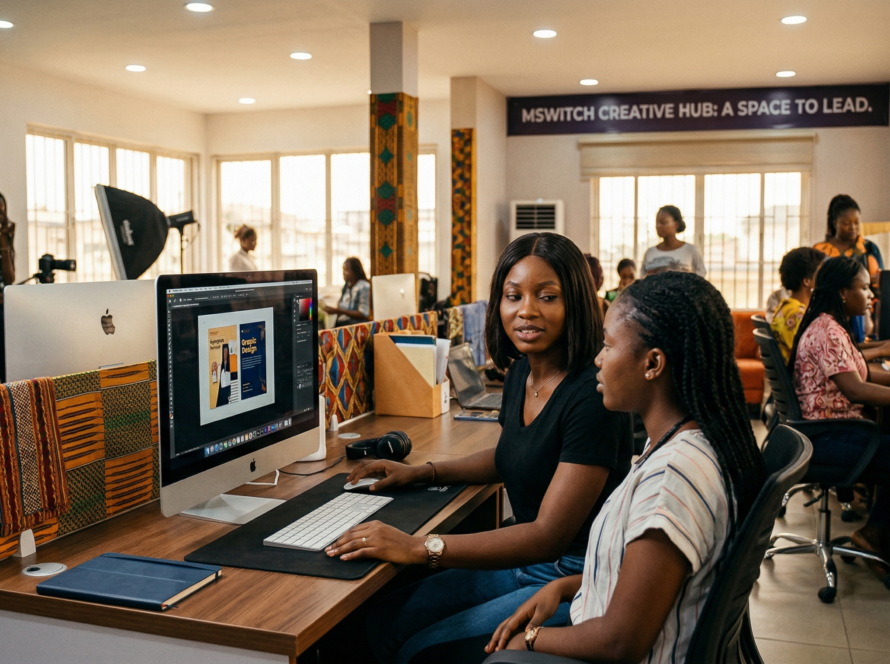
A creative hub may look like desks, cameras, microphones, editing suites, and training rooms.
But what it truly holds are:
- Possibilities
- Futures
- Enterprises
- Confidence
- Dignity
When funders and partners invest in creative hubs, they are not funding a building.
They are funding a bridge — between talent and opportunity, between creativity and commerce, between potential and prosperity.
Africa’s future will not only be built in boardrooms or factories.
It will be built in studios. In classrooms. In collaborative workspaces.
In creative hubs.
And the time to invest is now.