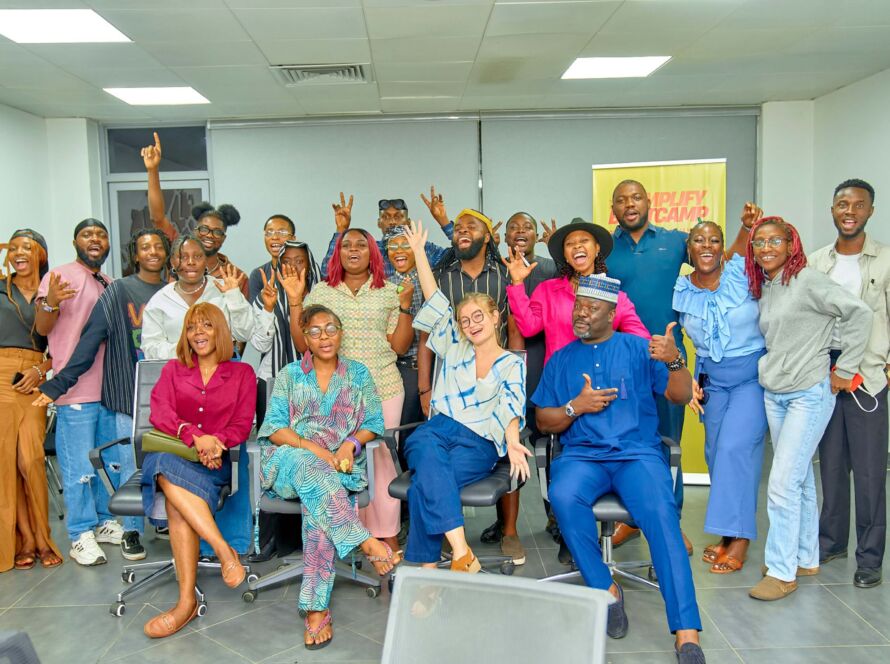
Africa has never been short on creative talent. Walk through any Nigerian city and you’ll find filmmakers, sound engineers, and visual artists doing extraordinary work — often with limited tools and zero institutional support. The talent is undeniable. But talent alone has never been enough to build a career. What’s missing is infrastructure, training, and a community that turns potential into income. That’s the gap MSwitch Creative Hub was built to close, and what we’re about to do next is the most ambitious step yet.
1. The Real Barrier Facing Africa’s Young Creatives
The conversation about Africa’s creative economy tends to start and stop at talent. We celebrate the music going global, the Nollywood numbers, the designers showing up on international runways. But behind every success story is a much quieter reality: most creatives on this continent are figuring things out alone.
There is no shortage of people who can shoot, edit, design, or direct. The shortage is in people who know how to price a project, negotiate a contract, build a client pipeline, or even set up a professional workflow. These are not soft skills. They are the actual mechanics of a sustainable creative career, and they are rarely taught anywhere accessible or affordable.
The result is a generation of talented people cycling through gigs, undercharging because they don’t know their market value, burning out because they have no system, and eventually drifting away from the work they love. That is the real barrier. Not ability. Infrastructure.
2. What World-Class Creative Infrastructure Actually Looks Like
Infrastructure in the creative space is not just about having a nice studio or fast internet, though those things matter. Real infrastructure is what allows a creative to function like a professional rather than a freelancer hoping for the next callback.
It looks like access to industry-standard equipment without having to own it outright. It looks like mentors who have actually navigated the African market, not just imported frameworks from contexts that don’t apply here. It looks like legal and business literacy built into creative training, so that a filmmaker understands licensing before they sign a deal they’ll regret. It looks like a community where knowledge moves laterally, peer to peer, not just top-down.
When creatives have that kind of environment around them, the output changes. Not because they suddenly became more talented, but because their talent finally has somewhere to land.
3. Why Cohort Training Outperforms Self-Directed Learning
Self-directed learning has its place. YouTube has taught a lot of people a lot of things. But there is a ceiling to what you can build alone, and most creatives hit it faster than they expect.
The problem with learning in isolation is that you only know what you know to look for. You can watch a hundred tutorials on video editing and still not know what a real production brief looks like, how to handle a difficult client, or what to do when a project scope starts to creep. Those gaps don’t show up until they cost you something.
Cohort-based training works differently because it compresses real-world experience into a structured environment. You’re learning alongside people at a similar stage, which means the questions being asked are relevant to where you actually are. You’re being pushed by deadlines and feedback, not just absorbing content passively. And you’re building relationships with people who will refer work to you, collaborate with you, and hold you accountable long after the programme ends.
The community that forms inside a well-run cohort is often worth as much as the curriculum itself.
4. The MSwitch Model: Train. Equip. Launch.
MSwitch Creative Hub was not built to offer another certificate programme. The model is simpler and more direct than that: take a creative with real potential, give them the skills and tools they need to operate professionally, and then put them in position to actually launch.
Training at MSwitch is hands-on and market-aware. It is designed around the realities of working in the African creative industry, not a syllabus borrowed from somewhere else. Participants leave knowing their craft and knowing the business of their craft. Those are two different things, and both matter.
Equipping means access. Access to resources, to networks, to the kind of connections that usually take years to build organically. MSwitch shortens that runway deliberately, because time is one thing most young creatives do not have to waste.
Launching is the part that most programmes skip. The goal was never just to train people. It was to watch them go and actually do the thing.
5. What’s Coming Next
There is something new in the works. Without giving everything away, the next phase of MSwitch is built for creatives who are past the beginner stage and ready to operate at a higher level. Think sharper skills, stronger networks, and the kind of intensive format that actually moves the needle.
Applications are not open yet, but they will be soon, and the spots will go to people who are already paying attention.
Join the Switchers community HERE to get early access to information of opportunities and programs when they drop.