What changes when an entrepreneur learns to tell the story of their business clearly?
Sometimes, they finally understand exactly who they are selling to.
Sometimes, an idea becomes an offer.
Sometimes, content stops being something they post randomly and becomes a system.
And sometimes, they close their first client.
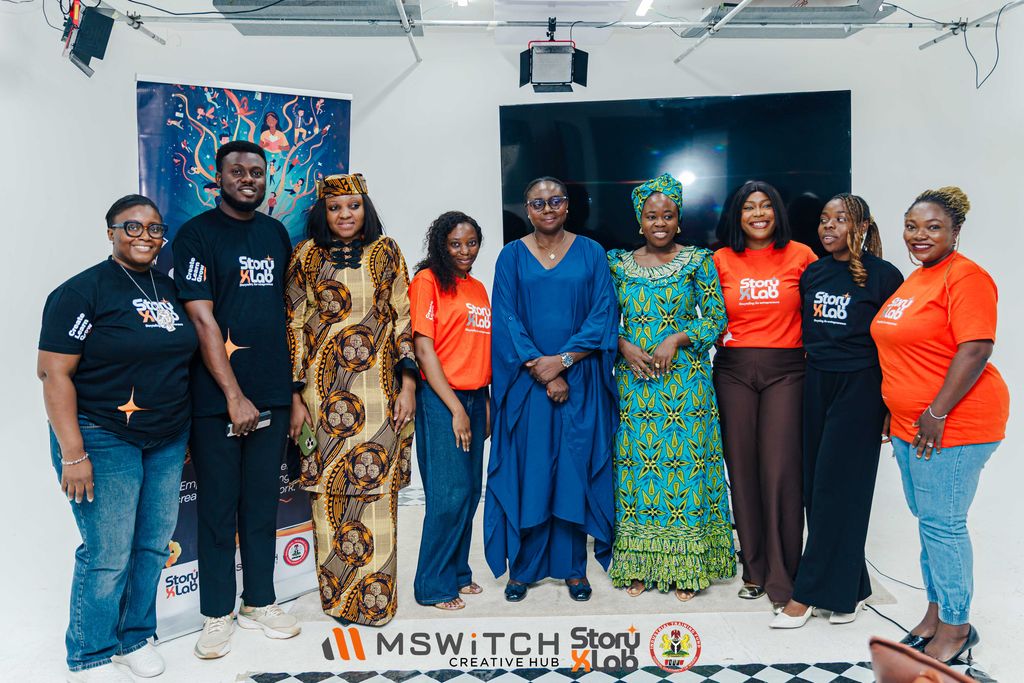
These were some of the stories that emerged from StoryXLab Cohort 2, an entrepreneurship storytelling programme delivered by Mswitch Creative Hub in collaboration with Techspecialist Consulting Ltd, with support and sponsorship from NECA–ITF TSDP.
The cohort concluded in September 2026 with 20 graduates and a collection of businesses that had become clearer about their audiences, positioning, founder stories and communication.
More Than Learning How to Tell a Good Story
This Cohort of Storyxlab was built around a simple but important idea: entrepreneurs need to be able to communicate the value of what they are building.
Across the programme, participants examined why their businesses existed, the people they wanted to serve and the problems those people were trying to solve.
They then translated those insights into practical business assets.
Founder stories became connected to customer problems. Broad descriptions of audiences became more specific customer profiles. Business ideas became clearer offers. Participants developed content strategies, communication systems and pitches designed around real enterprises.
The cohort itself reflected the diversity of Nigeria’s entrepreneurial and creative landscape, with businesses spanning marketing, creative media, fashion, food, events, legal services, human resources, health technology, children’s media, creative education, jewellery, agribusiness and AI-enabled services.
And by the end of the programme, the impact was showing up differently for different founders.
From No Clients to a First Client:
For Blessing Iheakam of Dubbee Global Resources Limited, StoryXLab began at a point where the business did not yet have a clearly defined offer, target audience, content strategy or clients.
By her final submission, that picture had changed.
Blessing had developed a clearer monthly-retainer offer, defined a priority audience, created an audience persona, documented her founder story and developed a four-week content calendar.
She also reported closing her first client.
It is an important example of what enterprise development can look like at an early stage: not simply having an idea, but developing enough clarity around that idea to begin taking it to the market.
Building a Health-Tech Story Ready for Bigger Rooms:
Michael Sunmoni came into StoryXLab with SerielleHealth, a health-tech venture he had already been developing.
During the StoryXLab period, Michael reported receiving the “Overall Best” recognition at the WLIMP Capstone Showcase 2026 alongside a ₦150,000 external grant for antenatal-care awareness work in Ikorodu.
StoryXLab did not create SerielleHealth or award the grant. What Michael developed within the programme was another critical layer of the business: its communication.
He built his founder story, developed a content system and created his final pitch deck, giving him a stronger framework for communicating what he was building as he continued pursuing opportunities.
300+ Sales and a More Intentional Brand:
For Deborah Adeduntan, founder of DML Foods & Treats, the journey was different.
Deborah was already selling.
Her business had begun years earlier with peanuts sold to fellow students before expanding into a broader snack business.
What changed during StoryXLab was the way she thought about the business behind the products.
Her final reflection showed a shift from primarily making and selling snacks towards becoming more intentional about her audience, positioning and brand communication.
The programme overview recorded more than 300 sales for DML Foods & Treats during the programme period.
But perhaps one of Deborah’s most important reflections captures the transformation better than a number could:
“When I started, I was trying to build a business. Now, I am becoming more intentional about building a brand.”
Turning an Idea Into Something People Can See:
When Chibueze Onyekpere entered StoryXLab, Kiyon Media was still largely an idea.
There was no defined customer profile, positioning statement, portfolio proof or published content under the business name.
By the end of the programme, Chibueze reported mapping two customer segments, defining the brand’s voice and positioning, producing two sample advertisements and publishing more than 20 pieces of content across Instagram and LinkedIn.
That progress matters because creative businesses need more than an idea.
Potential customers need something tangible to understand, assess and trust.
For Kiyon Media, StoryXLab helped turn thinking into visible evidence.
From 10 Parents to a Community of 77:
Nkechi Carol Ohireime entered with an idea for children’s stories through The Air Tribe Network.
At the beginning, the concept did not yet have a researched audience, tested problem or documented content plan.
By the final submission, Nkechi had completed a pilot screenplay, developed an audience persona, defined a brand voice and created a four-week content calendar.
She also reported growing a private WhatsApp community from 10 to 77 parents in under two months without advertising spend.
Beyond the growth in numbers, she had begun gathering feedback from parents, teachers and caregivers- moving the venture closer to understanding the people it wanted to serve and developing stories for them.
Making an Established Business Easier to Understand:
Not every StoryXLab participant was starting from scratch.
Obare Princess Dafiaghor brought an established legal practice, Goldstone Attorneys, into the programme.
Her challenge was communication.
The firm’s website messaging was unclear, customer pain points were largely assumed and content lacked structure.
By the end of StoryXLab, Obare reported rewriting the firm’s website About section and header, updating its social media descriptions and developing a clearer understanding of client pain points.
She also published one LinkedIn article and eight Instagram/Facebook posts and reported receiving comments on content for the first time.
It was a different kind of progress, but an equally important one: making years of expertise easier for prospective clients to understand.
Different Founders. Different Starting Points. Different Wins.
That became one of the clearest lessons from StoryXLab Cohort 2.
Impact does not look the same for every entrepreneur.
For one founder, progress was closing a first client.
For another, it was finally defining an audience.
For another, it was creating a portfolio that could be shown to prospective clients.
For an established business, it was learning how to communicate years of expertise more clearly.
Other participants developed founder narratives, customer profiles, content calendars, pitches and communication strategies they can continue applying beyond the programme.
Across the reviewed work, five areas of capability repeatedly emerged: customer understanding, business explanation, content planning, practical production and pitch preparation.
112 Applications. 20 Graduates. And a Foundation for What Comes Next.
StoryXLab Cohort 2 received 112 applications. Forty-nine applicants were selected, 30 participants started the programme and 20 graduated, representing a 66.7% completion rate among those who began.
Those numbers tell part of the story.
The participant work tells the rest.
The cohort ended with entrepreneurs who could describe their customers more precisely, explain their businesses more clearly and approach content, positioning and pitching with greater structure.
Selected participants also reported tangible milestones during the period, including a first client, more than 300 programme-period sales, an external ₦150,000 grant, community growth and active content production.
These outcomes should not all be interpreted as being caused solely by StoryXLab. They happened alongside the programme and, in several cases, were participant-reported.
But together with the communication assets participants produced, they show something important: what can happen when entrepreneurial skills are paired with the ability to communicate ideas effectively.
Building Beyond Graduation:
Graduation marks the completion of Cohort 2, but it should not mark the end of the story.
The next chapter is implementation.
How many participants will continue using the content systems they developed?
How will stronger pitches translate into client, funding and partnership conversations?
Which businesses will grow their audiences, revenue and teams?
Those are questions that can only be answered over time.
For Mswitch Creative Hub, the conclusion of StoryXLab Cohort 2 reinforces the importance of programmes that give entrepreneurs practical opportunities to strengthen both their businesses and the way they communicate them.
Because entrepreneurship is not only about having a good idea.
A founder must be able to understand the problem, communicate the value of the solution and give other people a reason to care.
Twenty entrepreneurs have now completed this chapter of StoryXLab.
What they build with it next is the story worth watching.
StoryXLab Cohort 2 was delivered by Mswitch Creative Hub in collaboration with Techspecialist Consulting Ltd, with support from NECA–ITF TSDP.